


MyDeskViewer goes public: public testing begins
MyDeskViewer is entering public testing with a product website, multilingual pages, SEO content and a new stage of user-driven development.
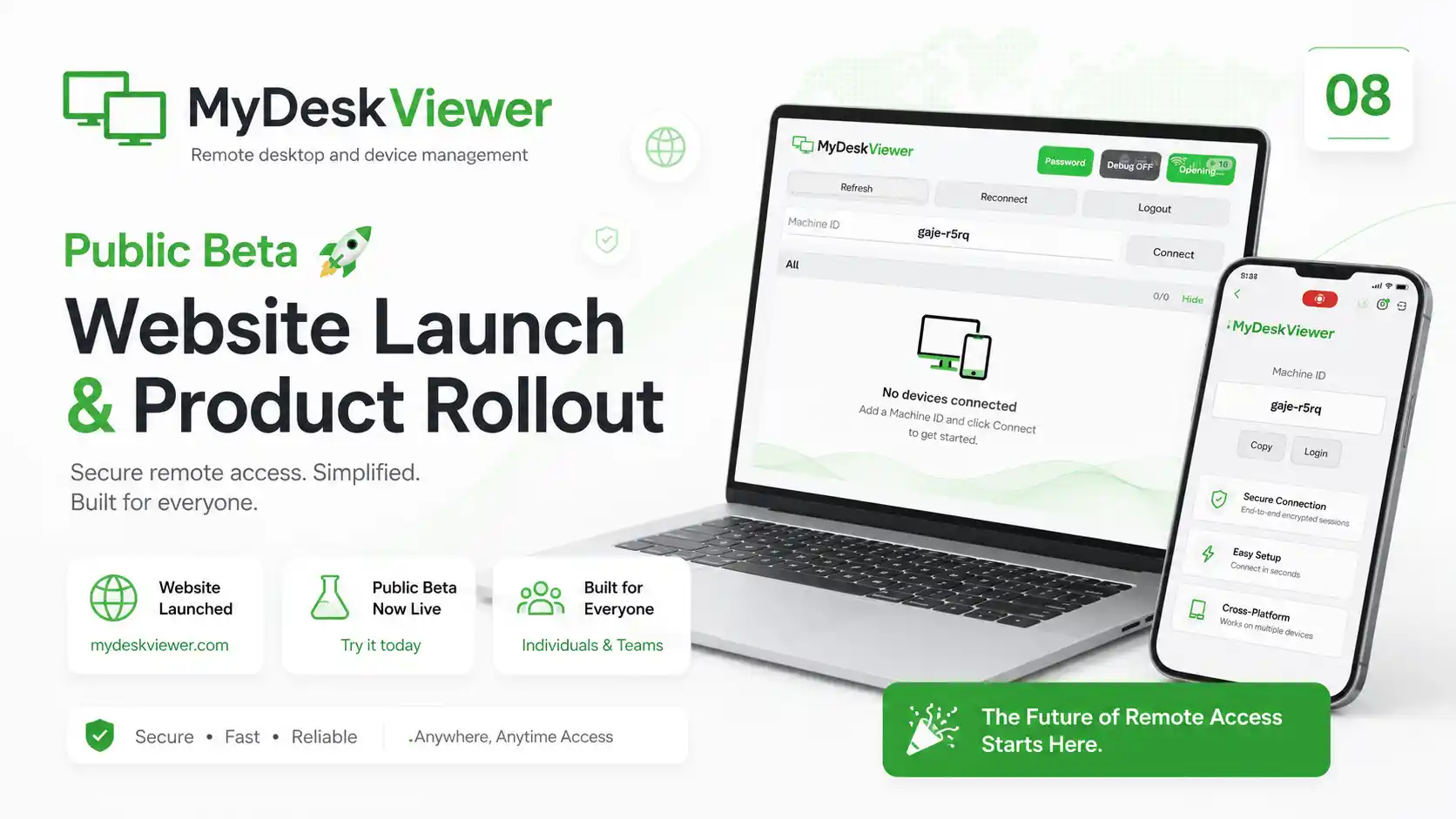
For a long time, almost all the energy around MyDeskViewer went into code. If there was a free hour, it was easier to improve a connection or fix another edge case than to write a product description, prepare a website or create material for someone seeing the project for the first time.
That balance is now starting to change. If the application is going to reach a wider group of testers, it needs more than a working executable. It also needs a website, a clear explanation of what MyDeskViewer is, download information and realistic expectations about the public testing stage.
That is why the latest development work is happening alongside the MyDeskViewer website, visual materials, language versions and basic SEO. The goal is not to build marketing that is bigger than the product. The goal is simply to make the project understandable and discoverable for someone looking for a remote-access solution.
Language versions are an important part of this process. Remote access is not limited to one country, so the website and registration flow are being prepared for multiple languages. Alongside them, we are publishing the first blog articles describing the development journey and the most important milestones.
This is also the point where MyDeskViewer begins to receive a different kind of feedback. Until now, most comments were about code, connections and bugs. During public testing, questions from new users will be just as important: is it obvious what to click, are the messages understandable, is installation straightforward, and does the application behave the way someone without any knowledge of its history would expect?
There is still plenty of work ahead. But after two years, MyDeskViewer has reached the point where it can finally be developed not only as a technical project, but also as a real product available to new users.