


Fewer new features, more reliability
The most important changes before a wider release are often invisible. They are the changes that make an existing feature work every time.
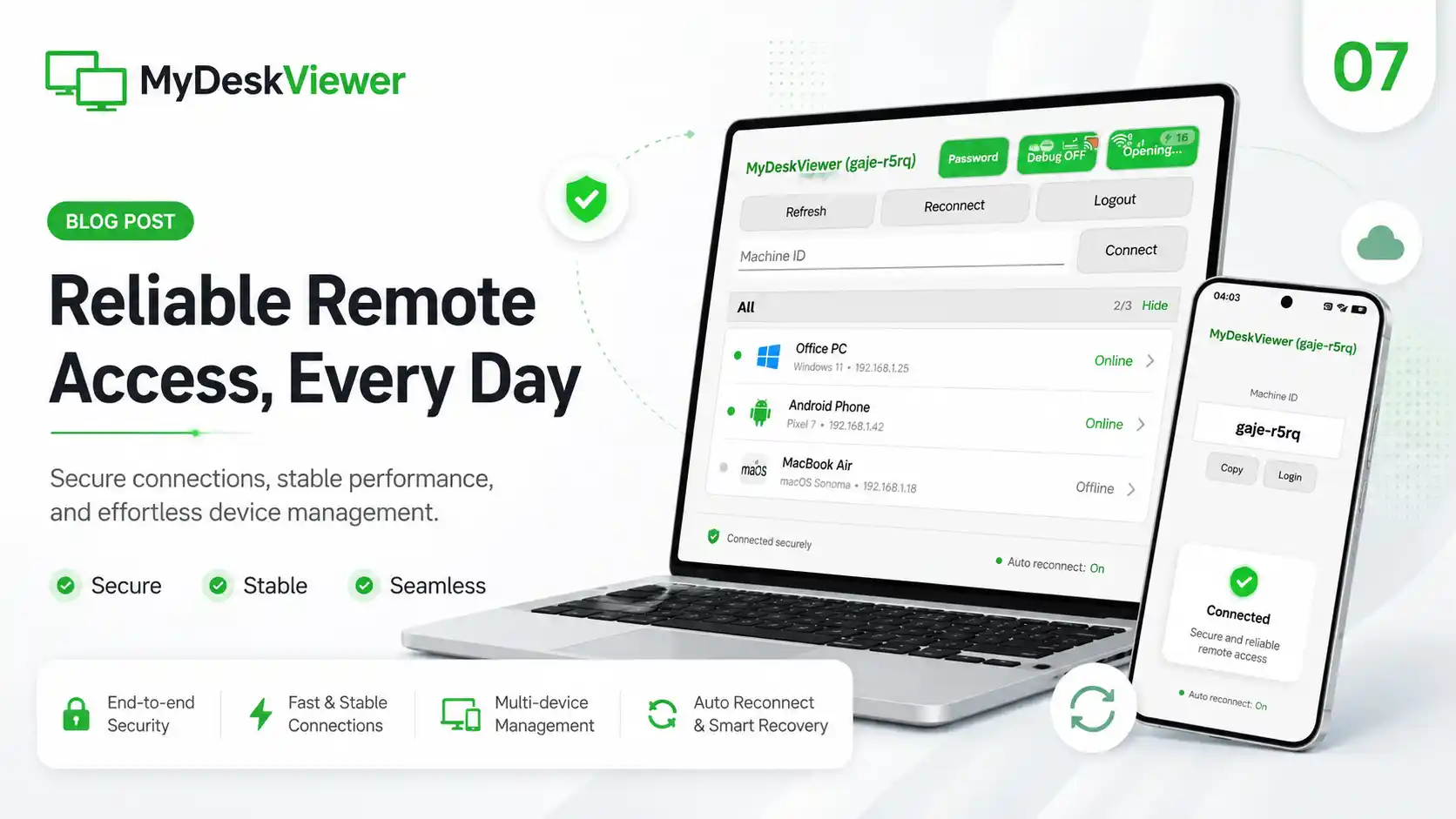
As public testing gets closer, adding another feature just to make the feature list longer becomes less useful. What matters more is refining what already exists. For MyDeskViewer, this phase took a significant part of the recent development cycle.
We improved behavior after connection loss, reconnection, device-state presentation and situations where a remote computer temporarily disappears from the network and comes back a moment later. These issues seem small until they happen during an important remote session. Then they become the most important part of the application.
Updates also required special attention. Remote-access software is different from an ordinary local application: if an update breaks the remote side, the user may not have an easy way to repair it in person. Version comparison, update sequencing and safe transitions between releases therefore deserve more care than a simple “Update” button suggests.
At the same time, we cleaned up the interface. An internal tool can contain technical buttons and messages understood only by the developer. A product used by other people needs to present Machine ID, connection state, available devices, sign-in and actions clearly without requiring any knowledge of the architecture behind them.
Many screens therefore became simpler while the application itself became more capable. A good interface should hide unnecessary complexity instead of moving that complexity onto the user.
This does not mean every problem has been solved. Public testing exists specifically to expose cases we have not predicted. The difference is that MyDeskViewer is now much better at handling everyday interruptions and returning to a correct state without manual intervention.